

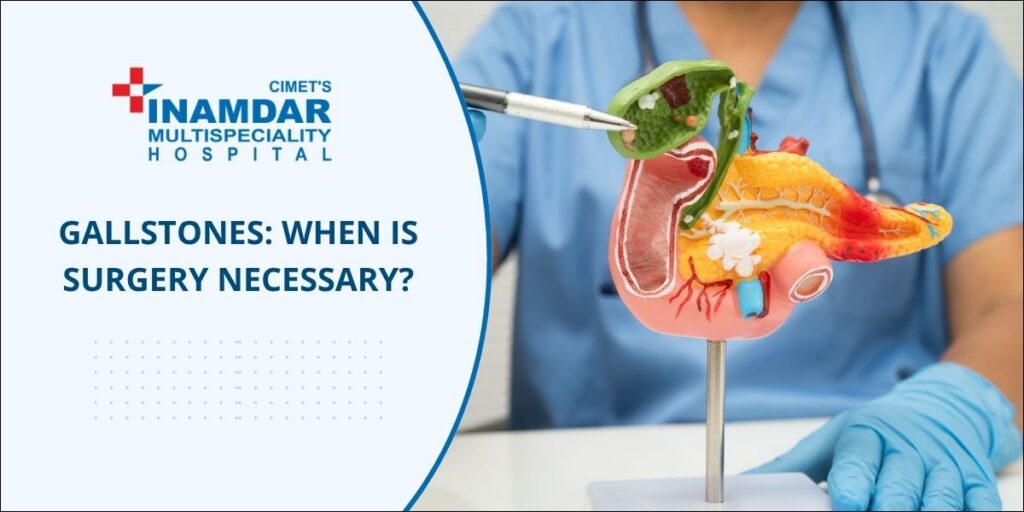
Gallstones: When Is Surgery Necessary?
Gallstones are hardened deposits that form inside the gallbladder. They can be as small as grains of sand or as large as a golf ball. Many people have gallstones without experiencing any symptoms, while others develop sudden and painful attacks that may require medical treatment. But how do you know when gallstones can simply be monitored and when surgery becomes necessary? Understanding the symptoms, risks and treatment options can help you make an informed decision with your doctor. What Are Gallstones? The gallbladder is a small, pear-shaped organ located beneath the liver. It stores bile, a digestive fluid that helps the body break down fats. Gallstones develop when substances in bile, such as cholesterol or bilirubin, become imbalanced and form solid particles. There are two main types of gallstones: cholesterol stones and pigment stones. Having gallstones does not always mean that treatment is required. When Do Gallstones Cause Problems? Gallstones often remain silent and may be discovered accidentally during an ultrasound or other imaging test. These are called asymptomatic gallstones and generally do not require immediate surgery. Problems arise when a stone blocks the normal flow of bile. This can cause a condition known as biliary colic, typically producing pain in the upper right or upper middle part of the abdomen. Common symptoms include: Sudden or intense abdominal pain Pain after eating, particularly after fatty meals Pain spreading to the back or right shoulder Nausea or vomiting Bloating or indigestion If these symptoms occur repeatedly, a doctor may recommend treatment rather than simply observing the gallstones. When Is Gallstone Surgery Necessary? Surgery is commonly recommended when gallstones cause recurring symptoms or complications. The standard procedure is laparoscopic cholecystectomy, in which the gallbladder is removed through small incisions. Your doctor may recommend surgery if you have: 1. Recurrent Gallstone Attacks Repeated episodes of severe abdominal pain indicate that the gallstones are causing symptoms. Once symptomatic gallstones develop, attacks may recur and can potentially lead to complications. 2. Acute Cholecystitis A gallstone can block the gallbladder outlet, causing inflammation known as acute cholecystitis. Symptoms may include persistent abdominal pain, fever, nausea and tenderness. Surgery may be advised to prevent further complications. 3. Gallstones in the Common Bile Duct Sometimes a stone leaves the gallbladder and enters the common bile duct. This can obstruct bile flow and may cause jaundice or infection. Such cases require prompt medical assessment and treatment. 4. Gallstone Pancreatitis If a gallstone blocks the passage near the pancreas, it can trigger pancreatitis, which causes significant abdominal pain and inflammation. Once the acute problem is managed, gallbladder removal may be recommended to reduce the risk of another episode. 5. Complications or High-Risk Findings Certain gallbladder conditions may increase the risk of complications and require specialist evaluation. The decision depends on factors such as symptoms, imaging findings, overall health and the presence of inflammation or obstruction. Is Gallbladder Surgery Safe? Laparoscopic gallbladder removal is one of the commonly performed abdominal surgeries. Instead of making one large incision, surgeons generally use several small incisions and a camera to remove the gallbladder. Recovery is often quicker than with traditional open surgery, although recovery time varies from person to person. Your surgeon will explain the expected benefits, risks and recovery process based on your individual condition. It is also important to understand that not every person with gallstones needs surgery. If stones are found incidentally and are not causing symptoms, your doctor may recommend observation instead. When Should You Seek Medical Help? Severe or persistent abdominal pain should not be ignored, especially if it occurs with fever, repeated vomiting, yellowing of the eyes or skin, dark urine or significant weakness. These symptoms may indicate a complication requiring urgent medical evaluation. If you have been diagnosed with gallstones, discussing your symptoms and scan findings with a qualified surgeon can help determine whether monitoring, medication or surgery is appropriate. Gallstone Surgery in Pune at Inamdar Hospital For patients looking for gallstone surgery in Pune, Inamdar Hospital provides surgical care and evaluation for gallbladder-related conditions. Patients can consult the surgical team to assess gallstone symptoms, ultrasound findings and possible complications and understand whether laparoscopic gallbladder removal may be appropriate. If you are experiencing recurrent abdominal pain or have been diagnosed with gallstones, consulting a specialist at Inamdar Hospital, Pune can help you understand your treatment options and plan appropriate care. FAQs 1. Can gallstones go away without surgery? Asymptomatic gallstones may not require treatment, but existing stones generally do not disappear on their own. 2. Is surgery necessary for every gallstone patient? No. Surgery is usually considered when gallstones cause symptoms or complications. 3. What is the most common surgery for gallstones? Laparoscopic cholecystectomy, or minimally invasive gallbladder removal, is commonly performed. 4. How do I know if gallstones are serious? Severe persistent pain, fever, vomiting or jaundice can indicate a complication and require prompt medical attention. 5. Can gallstones come back after gallbladder removal? Gallstones cannot form in a gallbladder that has been removed, although stones can rarely remain or develop in the bile ducts.
Gallstones: When Is Surgery Necessary? Read More »